 5 Safe and Sustainable Craft Ideas for Toddlers
When toddlers begin discovering their creative side, they rarely stay neatly within the lines. Crayons are held, dropped, shared, rolled across the floor and, sometimes, even explored with the mouth.
That is why choosing safe and thoughtful art materials matters so much.
For many parents, the challenge is finding creative activities that are fun, developmentally useful, and made with materials they can feel comfortable bringing into the home.
At NatureHue, we believe creativity should feel joyful, simple, and connected to nature.
Here are five safe and sustainable craft ideas for toddlers that encourage imagination, sensory exploration, fine motor development, and meaningful time together.
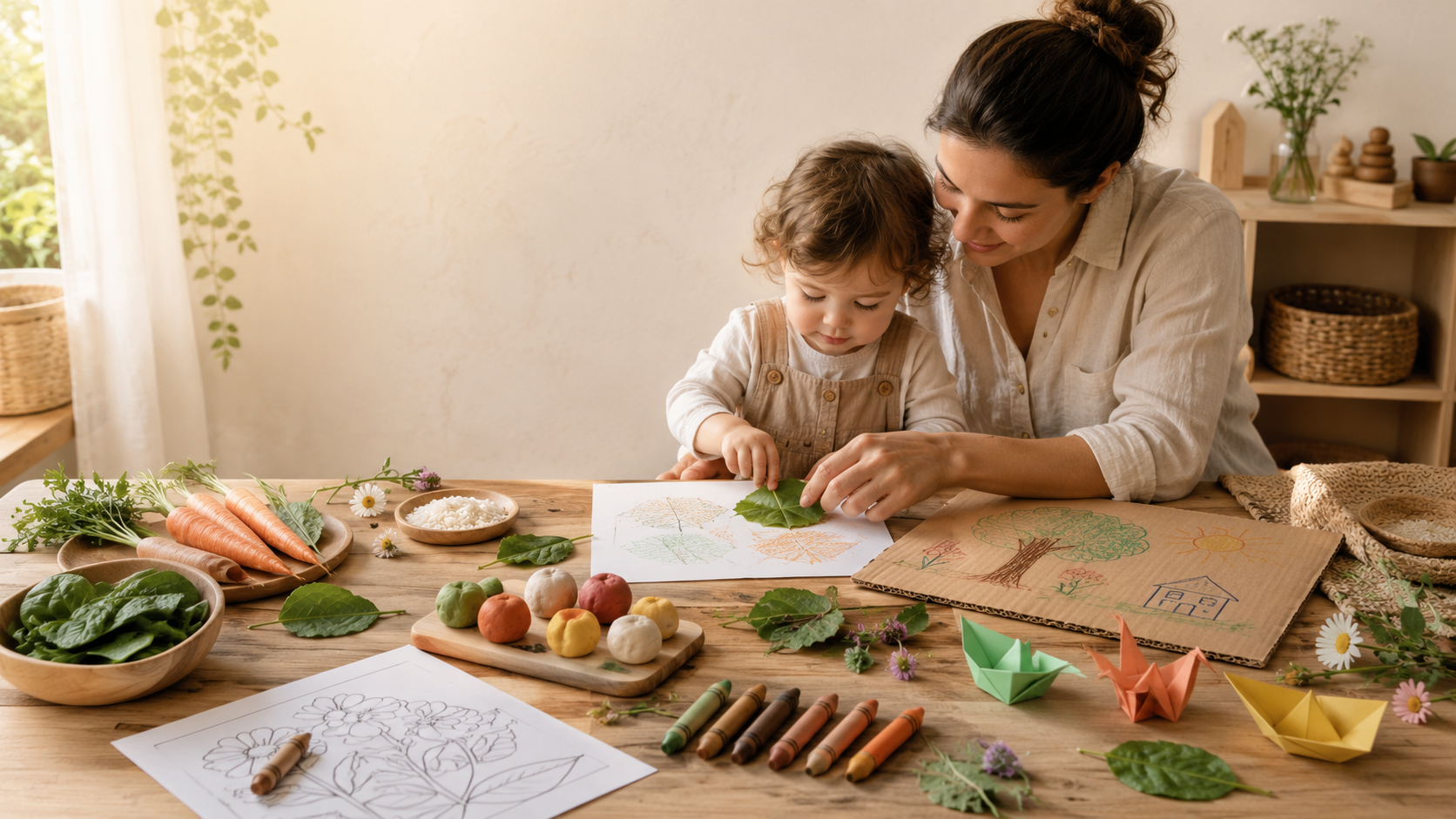
Leaf rubbing is one of the easiest nature crafts for toddlers.
Go outside together and collect leaves with different shapes and textures. Look for large leaves, small leaves, smooth leaves, and leaves with clearly visible veins.
Once you are home, place a leaf underneath a sheet of paper and gently rub over the surface with a crayon.
Slowly, the pattern of the leaf begins to appear.
This simple activity helps children:
Vegetable crayons are especially suitable for this kind of nature-inspired activity because their gentle colours fit beautifully with the natural theme.
Play dough is a classic activity for toddlers, and for good reason.
Rolling, squeezing, flattening, and shaping dough helps strengthen the small muscles in the hands and fingers. These are the same muscles children later use for drawing, writing, buttoning clothes, and other everyday tasks.
For a more nature-inspired sensory experience, vegetable play dough can bring colour and texture into play in a different way.
Children can:
The activity is open-ended, which means there is no single correct result. Children are free to experiment and create at their own pace.
That is often where the most meaningful learning happens.
Before throwing away your next delivery box, save it for creative play.
Open the box, flatten it, and place it on the floor. Suddenly, you have a large drawing surface with plenty of space for movement.
Give your child a few rice wax crayons and let them draw freely.
Large-scale drawing can help support:
It is also a simple way to introduce children to the idea of reuse.
Instead of buying another new craft material, something already at home is given a second life.
Colouring does not have to be a quiet activity that children do alone.
It can become a beautiful opportunity for conversation and connection.
Sit together with a colouring book or a simple picture and begin creating stories around what you see.
You might ask:
“What do you think this animal is doing?”
“Where is this flower growing?”
“What colour should we use next?”
These small conversations can help support:
For young children, creative time is often less about producing a perfect picture and more about sharing a meaningful experience.
For slightly older toddlers and preschool-aged children, simple origami can be a wonderful introduction to folding and concentration.
Start by letting your child colour the paper first.
Then fold it together into a simple shape, such as:
This type of activity combines two creative stages: first colouring, then transforming the paper into something new.
It can help children practise patience, focus, and following simple steps.
For younger children, the adult can do most of the folding while the child chooses the colours and helps press the paper.
The materials and activities we introduce during childhood can shape how children see the world around them.
When we choose to reuse cardboard, collect leaves, explore natural colours, and create with more thoughtful materials, sustainability becomes something children can experience directly.
It is no longer just an abstract idea.
They can touch it.
See it.
Create with it.
That is one of the most powerful ways children learn.
At NatureHue, we believe that children’s first creative experiences should be joyful, meaningful, and connected to the world around them.
Craft time does not need to be complicated.
Sometimes all you need is a leaf, a piece of paper, a cardboard box, a few colours, and time together.
These are often the moments children remember most.
Discover our carefully selected range of vegetable crayons, rice wax crayons, flower crayons, and plant-inspired creative materials.
Bring the colours of nature into your home and make everyday creativity a little more thoughtful.