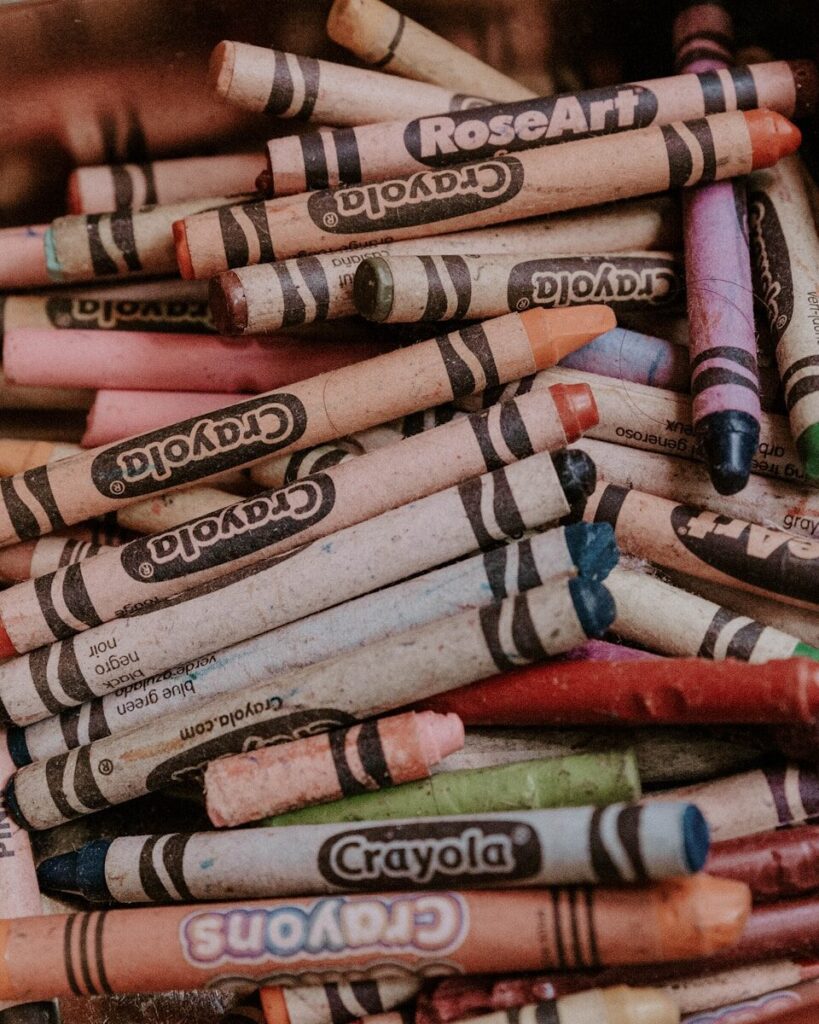
The Science Behind Vegetable-Based Crayons? When we think of crayons, we usually picture the bright, nostalgic boxes of our childhood. But behind that familiar waxy smell lies a complex industrial process. Traditionally, children’s crayons are made from paraffin wax—a petroleum byproduct—and colored with synthetic, coal-tar-derived dyes. For years, this was the only way to produce art supplies cheaply and at scale.
However, as modern science and environmental awareness evolve, a green revolution is quietely reshaping the art supply industry. Today, conscious parents and educators are turning to vegetable-based crayons as a safer, non-toxic, and truly sustainable alternative.
But have you ever wondered about the actual science behind these eco-friendly art tools? How can vegetables, flowers, and agricultural leftovers be transformed into a sturdy, brightly colored crayon that actually glides smoothly on paper?
Let’s take a deep, scientific dive into how modern manufacturers harness the power of nature to create high-performing vegetable-based crayons using upcycled rice wax and food-grade pigments.
The structural backbone of any crayon is its wax. In conventional crayons, paraffin wax provides the solid structure. To replace this fossil-fuel derivative, researchers looked for a natural wax that is solid at room temperature, has a high melting point, and offers a smooth texture.
The answer was found in the agricultural food waste stream: rice bran.
During the rice milling process, the brown outer layer of the rice grain is polished off to create white rice. This discarded outer layer is known as rice bran. Rice bran is naturally rich in oils and waxes. Through a specialized extraction process, scientists and eco-manufacturers can refine this agricultural byproduct to create rice bran oil and rice wax.
Rice wax has a relatively high melting point (around 77°C to 82°C), which is even higher than bees wax or paraffin. This high thermal stability is a crucial scientific advantage. It ensures that the resulting vegetable-based crayons do not easily melt or soften when held by warm, tiny hands, nor do they snap under normal drawing pressure. Furthermore, rice wax is inherently biodegradable and completely safe if accidentally ingested by toddlers.
One of the most fascinating aspects of the science behind vegetable-based crayons is how they achieve their beautiful, realistic colors without relying on heavy metals or synthetic petrochemical dyes.
Instead of lab-synthesized chemicals, the colors are derived directly from the earth. Manufacturers partner with farmers to collect off-grade fruits, vegetables, and flowers that do not meet the strict aesthetic standards for supermarkets—such as irregular carrots, bruised apples, or discarded outer leaves.
The transformation from raw vegetable to crayon pigment involves three main scientific steps:
Raw vegetables contain a high percentage of water, which would ruin the wax formulation. To extract pure color, the collected plants are gently dried or freeze-dried. This process removes almost 100% of the moisture while preserving the organic structures of the natural plant pigments.
Once dried, the plant materials are crushed and milled into an ultra-fine powder. The particle size must be incredibly small—measured in microns—to ensure that when the powder is mixed with the melted rice wax, it distributes evenly without creating a gritty, uneven texture.
To ensure the colors are rich and light-resistant (so drawings do not fade quickly when exposed to sunlight), these plant powders are carefully blended with safe, food-grade pigments. These are the exact same pigments certified and trusted by food safety authorities to color the foods we eat every day.
Creating the perfect formula for vegetable-based crayons is a delicate balancing act. If you simply mix melted wax with vegetable powder, the pigment will sink to the bottom of the mold as it cools.
To prevent this, food scientists and chemists use precise temperature control and specific emulsifying techniques:
Homogenization: The melted rice wax, rice bran oil, and micro-milled plant pigments are blended in a high-shear mixer. This process forces the vegetable particles to bind tightly with the wax molecules.
Controlled Cooling: The liquid mixture is poured into precisely engineered crayon molds. The rate of cooling is carefully regulated. If the crayons cool too quickly, they can become brittle and crack. If they cool too slowly, the pigments may separate.
When done correctly, the result is a beautifully uniform, sturdy, and richly colored crayon that glides effortlessly on paper.
The scientific journey from rice bran and discarded carrots to a beautiful drawing tool is more than just an engineering feat. It represents a vital shift toward a circular economy.
By utilizing upcycled agricultural byproducts, vegetable-based crayons reduce waste, lower carbon footprints, and eliminate the need for petroleum extraction. Most importantly, they offer absolute peace of mind. Parents no longer have to worry about toxic chemicals, heavy metals, or plastic residues entering their child’s system during creative play.
The next time you see a child sketching with a natural crayon, you can appreciate the incredible science that made it possible—a perfect harmony of agricultural innovation, green chemistry, and the simple beauty of nature.