How to Choose Sustainable Art Supplies for a Montessori Home? When you step into a Montessori-inspired home, you immediately notice a sense of order, beauty, and simplicity. There are no flashing plastic toys, no towering bins of mismatched synthetic gadgets, and no overwhelming noise. Instead, you find natural wood, open shelves, and activities designed to invite deep, self-directed concentration.
The Montessori philosophy, developed by Dr. Maria Montessori, places immense value on the “prepared environment.” Every object in a child’s space should have a purpose, be beautiful, and connect them deeply to the natural world.
For parents striving to raise conscious, independent children, art is one of the most powerful areas of self-expression. However, finding the right tools that align with both Montessori principles and modern eco-friendly standards can be a challenge. Conventional craft bins are often overflowing with disposable plastics, chemical-heavy glues, and petroleum-based crayons.
If you want to cultivate a creative corner that respects both your child’s development and the Earth, choosing sustainable art supplies is the ultimate solution. Here is a comprehensive guide on how to choose sustainable art supplies for your Montessori home.
At its core, Montessori education is deeply rooted in respect—respect for oneself, respect for others, and respect for the environment. Dr. Montessori believed that children have a natural, almost spiritual connection to nature. By exploring the natural world, children develop a sense of wonder, gratitude, and responsibility.
When we introduce plastic-heavy, mass-produced art materials, we create a disconnect. Synthetic materials feel artificial, lack sensory richness, and teach a subtle lesson about disposability.
On the other hand, sustainable art supplies provide a rich sensory experience. They have unique textures, weights, and even natural scents (like the faint, earthy aroma of rice wax and dried vegetables) that stimulate a child’s senses in a calm, non-hyperactive way. Choosing sustainable art supplies is not an extra step; it is a fundamental extension of Montessori’s commitment to the real world.
Setting up an eco-friendly art station requires a shift in mindset. Instead of focus on “more”, we should focus on “mindful.” Here is how you can select the best sustainable art supplies for your child’s creative workspace:
In a Montessori environment, materials should be authentic and high-quality. This gives children a true representation of the world. Standard children’s crayons are made from paraffin wax, which is a fossil fuel derivative.
To align with a sustainable Montessori home, look for crayons made from renewable, vegetable-based waxes. Premium sustainable art supplies often use wax derived from upcycled rice bran (rice wax) colored with organic vegetable and flower pigments. These natural pigments produce soft, warm, and realistic colors that represent the true shades of nature.
For a child, the canvas is just as important as the drawing tool. Conventional heavy-white drawing paper is often bleached using harsh chlorine and coated with synthetic finishes to make it glossy.
To keep your art shelf eco-friendly, seek out paper alternatives made from recycled fibers, bamboo, or agricultural residues (such as upcycled fruit peels). A slightly textured, natural-toned paper provides a richer sensory feedback to a child’s hand.
One of the key tenets of the Montessori prepared environment is that children should use “real” tools, scaled down to their size. This builds confidence, coordination, and a sense of responsibility.
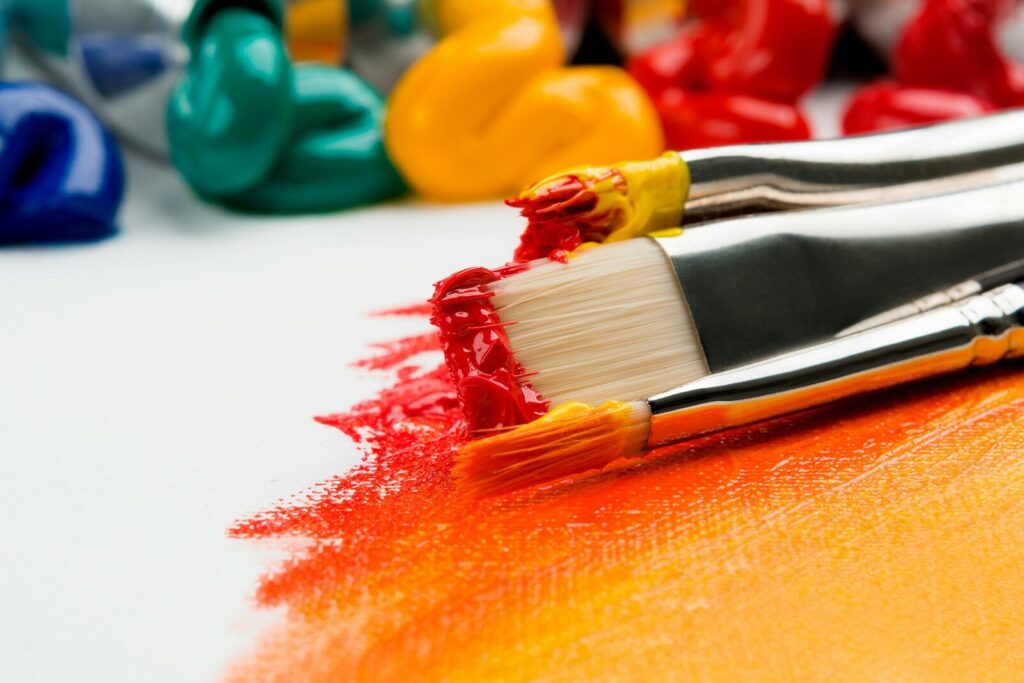
Avoid cheap plastic brushes with synthetic nylon bristles that shed microplastics. Instead, select sustainable art supplies such as sturdy paintbrushes made from sustainably sourced wood and natural hair bristles, real metal trays, and small glass jars for rinsing.
A Montessori art shelf should invite the child to work independently. Here is how to organize your sustainable art supplies to foster self-regulation and creativity:
Limit the Choices: Too many options lead to overwhelm. Provide only 2 to 3 activities on the shelf at a time (e.g., a set of vegetable crayons with some recycled paper, or a simple clay-modeling station).
Organize in Low Wooden Trays: Use natural bamboo or wooden baskets to organize the materials. Everything required for the activity should be neatly contained on one tray, so the child can easily carry it to their workspace independently.
Adopt a Zero-Waste Routine: Keep a reusable, damp cotton cloth on the tray for the child to wipe spills, rather than relying on disposable wet wipes. Include a small scrap bucket next to the shelf so they can compost paper scraps or collect them for future projects.
Setting up a Montessori art corner is about more than just teaching your child how to draw a tree; it is about teaching them how to respect the tree. By curating a creative space filled with sustainable art supplies, you are creating a sanctuary of mindful play.
Your child will learn to appreciate the rich, earthy tones of natural vegetable pigments, the comforting texture of recycled paper, and the joy of creating without leaving a heavy footprint on the Earth. In doing so, you are raising a child who is not only creative and independent but also deeply connected to and protective of the beautiful world around them.